Longevity gets used loosely in beauty marketing, often as a synonym for anything labeled anti-aging. In research, the word has a narrower and more useful meaning, and that meaning changes how you think about your skin, your routine, and the years ahead. Understanding the difference between living longer and living well is the starting point for treating skin as something you maintain across decades rather than something you fight in a single season.
What Longevity Actually Means
Longevity refers to an unusually long life. That is the definition used by researchers at the Max Planck Institute for Biology of Ageing, who place the term alongside three others that people tend to use interchangeably: life expectancy, lifespan, and healthspan. Wikipedia's entry on longevity adds a second layer, noting that the word can also describe especially long-lived members of a population, which is why you sometimes see it applied to groups rather than individuals.
Those distinctions matter because they describe different things:
| Term | What it describes |
|---|---|
| Life expectancy | The average number of years people in a given population can expect to live |
| Lifespan (life duration) | The time between an individual's birth and death |
| Longevity | An unusually long life, or especially long-lived members of a population |
| Healthspan | The period of life spent in good health |
So longevity is not a target number you hit. It is a description of an unusually long life, measured against the population you belong to. Life expectancy is a statistical average. Lifespan belongs to one person. Healthspan is about the quality of the years in between.
Longevity, Lifespan, and Healthspan Are Not the Same Conversation
Researchers at the Karolinska Institutet put the priority plainly: a longer life is not the only desirable outcome, and the stated goal is to extend the period during which a person is healthy, which researchers call the healthspan. The Max Planck Institute frames it through healthy life years, defined as the number of years a person lives in optimal health and is able to live independently.
That reframing is where skin care becomes interesting. If the point is not simply adding years but protecting the quality of the years you already have, then daily habits that support the body show up in the mirror too. Skin is one of the most visible places where the passage of time registers, which makes it a practical place to apply the same thinking behind healthspan research.

Why Skin Belongs in the Longevity Conversation
Longevity stems from what researchers describe as a multifactorial resilience, involving protective genetics, efficient metabolism, low inflammation, and other favorable factors that work together over a lifetime. Skin is not separate from those systems. It is part of the body that genetics, metabolism, and inflammation are already operating on, which is why a routine focused only on surface appearance tends to run out of road.
This is also why the messaging around professional skincare has shifted. Instead of promising to reverse age, a more defensible goal is supporting skin consistently so it keeps doing its job: holding moisture, managing irritation, and looking like itself. That approach fits the way longevity research talks about health, as something you maintain rather than something you rescue.
The Foundations Researchers Keep Returning To
Harvard Health reports that the keys to perhaps living to age 100 or more are a healthy diet, regular physical activity, and good lifestyle choices, along with getting enough sleep. Those are the broad strokes, and they appear repeatedly in the literature because they are the levers most people can actually reach.
Read that list again and notice what is missing. None of it is a single product, a single treatment, or a single week of effort. Each item is a pattern you repeat. Skin responds to the same logic. Cleansing happens more than once a day for most people. Moisturizer goes on more days than it does not. Sun protection works when it is a habit rather than a decision.
Sleep deserves its own line here. Harvard Health names it as part of the lifestyle picture for a long life, and anyone who has looked in the mirror after a short night understands that skin keeps its own record of rest.
Genetics, Metabolism, and Inflammation
The research describes longevity as a product of several forces interacting, not a single determining factor. Protective genetics sit at one end of that list, which is the part no routine can rewrite. Efficient metabolism and low inflammation sit at the other end, and those are the areas that lifestyle habits are most often discussed in relation to.
What this means for a skincare routine is modest and honest. A product cannot change your genetics. What a well-built routine can do is avoid adding unnecessary irritation, support the skin's own moisture and barrier functions, and stay consistent enough that the skin is not starting over every few weeks.
What Skin Longevity Looks Like in Practice
Translate the research into a routine and four steps cover most of it. None of them are dramatic. Their value is that they hold up over years rather than delivering a short burst of visible change.
Cleanse Without Stripping
A cleanser should remove what accumulated during the day without leaving skin tight or reactive. For drier or more sensitive skin, a cream or oil-based cleanser tends to sit more comfortably. For oilier or breakout-prone skin, a wash that manages excess oil without over-drying does the same job from the other direction. If your skin stings after cleansing, the cleanser is doing too much.
Use Actives With a Purpose
Serums carry the concentrated ingredients in a skincare line, and they are usually where a routine gets targeted. The practical rule is one clear goal at a time rather than a stack of products all doing similar work. Layering several strong actives at once invites irritation, and irritation is the opposite of what a long-run approach is trying to achieve.
Support Moisture and the Barrier
Moisturizer is not a cosmetic finishing step. It supports the skin's barrier function, which is what keeps water in and irritants out. Choose according to skin type: acne-soothing formulas for breakout-prone skin, richer hydration for dry or mature skin. If your skin feels comfortable at the end of the day, the moisturizer is doing its job.
Make Sun Protection Routine
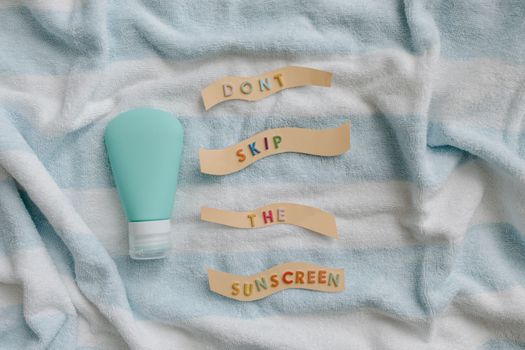
Daily sun protection is a standard part of professional skincare guidance. It belongs in the habit column rather than the occasional column, which means it should be the easiest step in the routine to repeat. For anyone managing a specific skin condition or using prescription treatments, a dermatologist is the right person to advise on what to use and how often.
Building a Routine You Will Still Be Using in Ten Years
The habits that support a long, healthy life are unglamorous and repetitive by nature. The same is true of skin longevity. A routine that survives a decade is usually short, comfortable, and adapted to what your skin is doing now rather than what it was doing five years ago.
Meta Skincare was founded in 2017 in Palm Springs by Juliet Tierney, and the brand's approach centers on the person behind the skin rather than an anti-aging promise. The line spans cleansers, serums, moisturizers, eye treatments, mists, and sunscreen, with ranges built around clear skin and acne as well as anti-aging and dry skin. In-person treatments and waxing are available at associated rooms in Palm Springs and Borrego Springs, California, and West Hampstead, London.
If you are in your thirties, forties, or sixties and your skin has changed alongside hormonal shifts, the sensible move is to reassess rather than add more products. Fewer steps you actually follow beat a long routine you abandon by February.
Frequently Asked Questions
What does longevity mean?
Longevity refers to an unusually long life. Researchers also use the term for especially long-lived members of a population, which is why it appears in both individual and group contexts. It is different from life expectancy, which is a statistical average for a population, and from lifespan, which describes the time between one person's birth and death.
What is the difference between longevity and healthspan?
Longevity is about an unusually long life. Healthspan is about the period of that life spent in good health. The Max Planck Institute for Biology of Ageing defines healthy life years as the number of years a person lives in optimal health and can live independently. Researchers at the Karolinska Institutet state their primary goal is extending healthspan.
What age is considered a long life?
There is no single threshold, because the term is relative to the population being described. Longevity means an unusually long life compared with a typical lifespan. Harvard Health notes that the keys to perhaps living to age 100 or more include a healthy diet, regular physical activity, good lifestyle choices, and getting enough sleep.
What habits support a longer, healthier life?
Harvard Health points to a healthy diet, regular physical activity, good lifestyle choices, and adequate sleep. Research on human longevity describes it as stemming from multifactorial resilience that includes protective genetics, efficient metabolism, and low inflammation. Genetics are fixed, which is why the lifestyle habits receive so much attention in the research literature.
Can a skincare routine really support skin longevity?
A routine cannot change your genetics, and no credible source claims otherwise. What a consistent routine can do is avoid unnecessary irritation and support the skin's barrier and moisture levels over time. For specific concerns, prescription treatments, or changing skin conditions, consult a dermatologist rather than relying on general guidance alone.
0 comments